Vietnam Travel Budget is an important consideration when planning a trip to Vietnam. With careful planning, you can enjoy Vietnam without overspending on hotels, food, transportation, and activities.
But having an affordable trip does not simply mean spending as little as possible.
A better approach is to know where your money is going, decide what matters most to you and avoid spending unnecessarily. A little planning before the trip can make a big difference once you arrive.
If you’re planning your first visit to Vietnam, this guide will help you understand how to create a practical Vietnam travel budget without making your vacation uncomfortable.
Why Vietnam Can Be a Good Destination for Budget Travelers
Vietnam offers a wide range of choices when it comes to accommodation, food, transportation and activities.
You can stay in a simple guesthouse or choose a comfortable hotel. You can eat a quick local meal from a small restaurant or enjoy dinner at a more expensive place. For transportation, you can choose between buses, trains, ride-hailing services and domestic flights.
This flexibility makes it easier to adjust your spending according to your own situation.
The important thing is not to assume that every part of your trip has to be cheap.
Instead, decide where you are comfortable saving money and where spending a little extra will make your experience better.
For example, you might save money on food during the day and use that extra money for a memorable boat trip or a comfortable hotel.
That is usually a better way to travel than trying to cut every possible expense.
Decide Your Travel Style Before Setting a Budget
Before calculating your Vietnam travel budget, think about the type of traveler you are.
A backpacker traveling alone will have very different expenses from a couple staying in private hotels.
If you enjoy simple accommodation, local restaurants and public transportation, your daily spending can remain relatively low.
If you prefer comfortable hotels, private transportation and organized tours, you’ll need a larger budget.
There is also a middle option that works well for many travelers.
You can stay in comfortable but reasonably priced hotels, eat local food most of the time, use affordable transportation and choose only a few paid activities.
This approach gives you comfort without making the entire trip expensive.
Plan Your Biggest Expenses First
One of the easiest ways to create a travel budget is to start with the expenses that are likely to cost the most.
For a Vietnam trip, these usually include your international flight, accommodation, transportation between cities and major activities.
Once you have an idea of these costs, you can plan your daily spending on food, drinks, local transportation and shopping.
This is better than deciding on a random daily amount without considering the bigger expenses.
For example, a traveler who spends very little on food but books several expensive tours could still end up spending much more than expected.
Your budget should therefore include both daily expenses and occasional larger payments.
Set a Daily Spending Limit
A daily spending limit can make managing money much easier during your trip.
You don’t have to follow the number perfectly every day.
Some days you may spend more because you are taking a tour or traveling to another city. On another day, you may spend much less because you are walking around town and eating local food.
The idea is to look at your average spending rather than worrying about every individual purchase.
You can use the notes app on your phone to record your expenses.
Write down what you spend on food, transportation, activities and shopping.
After a few days, you’ll have a better idea of your actual spending habits and can adjust your budget if necessary.
Save Money on Accommodation
Accommodation is one area where planning can make a significant difference.
Vietnam has hostels, homestays, guesthouses, boutique hotels, international hotel chains and luxury resorts.
If you are traveling alone, a hostel or simple guesthouse may be enough.
For couples or families, a private room in a mid-range hotel can provide a good balance between price and comfort.
However, don’t compare hotels based only on the room price.
Location is important.
A hotel that costs slightly more but is close to restaurants, attractions and public transportation may actually save you money on taxis and ride-hailing services.
Before booking, check recent reviews and look at the location on a map.
Also check whether breakfast, Wi-Fi, air conditioning and other facilities are included.
Consider Homestays in Smaller Destinations
Homestays can be an interesting option in places such as rural areas, mountain regions and smaller towns.
Besides accommodation, they can provide an opportunity to experience local life more closely.
Some homestays also offer meals or activities, which can make them useful for travelers who want a more complete experience.
Don’t expect every homestay to have the same level of comfort as a hotel.
Read recent reviews carefully before booking so you know what to expect.
Eat Like a Local
Food is one of the easiest areas where you can save money in Vietnam without sacrificing the experience.
Vietnamese street food and local restaurants offer plenty of affordable choices.
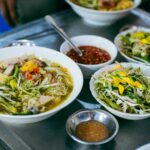
You can try pho, banh mi, bun cha, rice dishes, noodles and regional specialties without visiting expensive restaurants every day.
Eating local food also gives you a chance to experience the country beyond tourist areas.
Look for places that are busy with local customers and appear clean and well maintained.
You don’t need to avoid restaurants completely.
Instead, mix different options throughout your trip.
You could have a simple local breakfast, enjoy street food for lunch and choose a nicer restaurant for dinner when you want something special.
Don’t Forget the Small Food Expenses
Travelers often remember to budget for meals but forget about drinks and snacks.
Coffee, bottled water, fresh juice, desserts and small snacks can slowly increase your daily spending.
Vietnam’s coffee culture is worth experiencing, so you shouldn’t avoid cafés just to save every coin.
Instead, include these small expenses in your daily budget.
If you know you’ll enjoy having coffee every afternoon, simply make room for it.
A realistic budget is much easier to follow than an extremely strict one.
Be Smart About Transportation
Transportation costs can increase when travelers move between too many destinations.
Vietnam is a long country, so it takes time and money to travel from one region to another.
Before creating your itinerary, look at the distance between destinations.
If you only have one week, visiting Hanoi, Da Nang, Hoi An, Ho Chi Minh City and Phu Quoc may leave you spending a large part of your vacation on transportation.
Choosing fewer destinations can sometimes save both money and energy.
A slower itinerary often allows you to enjoy each place more.
Use Ride-Hailing Services Carefully
Ride-hailing apps can be convenient in larger Vietnamese cities.
They may also make it easier to understand the expected fare before starting a journey.
Vietnam Travel Budget: How Much Money Do You Need?
If the destination is nearby and the weather is comfortable, walking can save money and allow you to see more of the neighborhood.
For longer journeys, compare the cost of different transportation options before booking.
Small savings on daily transportation can become meaningful over a week or two.
Compare Buses, Trains and Flights
When traveling between cities, compare the total value rather than looking only at the cheapest ticket.
A bus may cost less but take many hours.
A train can provide a different travel experience and may be useful for certain routes.
A domestic flight usually costs more but can save a significant amount of time.
If your trip is short, paying a little more for a flight may actually be worth it because you’ll have more time at your destination.
On a longer trip, slower transportation may make more sense.
Your available time should therefore be part of the budget decision.
Save Money by Choosing Your Destinations Carefully
Some destinations naturally require more spending than others.
Popular beach resorts and luxury areas can have higher accommodation and activity costs.
Smaller cities and less touristy areas may offer more affordable options.
This doesn’t mean you should avoid popular destinations.
Instead, balance them with places where your money can go further.
For example, you might spend a few days enjoying a popular destination and then move to a smaller town where accommodation and food are more affordable.
This can create a more interesting trip while keeping your overall spending under control.
Be Careful With Tours and Activities
Tours are one of the easiest ways to go over budget.
Vietnam offers boat trips, cooking classes, guided city tours, mountain excursions, adventure activities and many other experiences.
You don’t need to book everything.
Choose the activities that you are genuinely interested in.
Before booking a tour, compare what is included.
Check transportation, meals, entrance fees, guide services and other costs.
A tour with a slightly higher price may actually be better value if it includes several things that another company charges separately.
Read recent reviews as well.
A cheap tour is not necessarily a good deal if the experience is poor.
Choose One or Two Special Experiences
Instead of spending money on lots of small activities, consider choosing one or two experiences that you will remember for a long time.
It could be a Ha Long Bay cruise, a cooking class in Hoi An, a guided mountain trip or another activity that matches your interests.
This approach gives your trip some special moments without requiring you to pay for every attraction you see.
Free time is valuable too.
Walking through an old town, visiting a local market or sitting in a café can become memorable parts of a trip.
Don’t Overspend on Shopping
Vietnam has many attractive souvenirs and local products.
Coffee, handmade items, clothing, artwork and other products can be tempting when you visit markets and shops.
But shopping can quickly become an unexpected expense.
Set a separate shopping budget before your trip.
If you see something you like, compare prices before buying.
Don’t feel pressured to purchase something simply because a seller tells you it is a special deal.
Buying fewer meaningful souvenirs is often better than returning home with a suitcase full of things you didn’t really need.
Avoid Unnecessary Currency Exchange Costs
When traveling internationally, exchange rates and transaction fees can make a difference.
Before your trip, check what fees your bank or card provider may charge for international transactions.
Carry some local currency for small purchases, especially in places where cards may not be accepted.
At the same time, don’t carry more cash than you need for the day.
Keeping your money in more than one place can also be a useful precaution.
The goal is to make payments convenient without paying unnecessary fees.
Keep an Emergency Fund
Even the best travel plan can change unexpectedly.
A missed connection, sudden transportation change, unexpected medical expense or last-minute hotel booking can increase your spending.
For this reason, don’t use every last bit of your budget on planned activities.
Keep some extra money aside as an emergency fund.
You may never need it, but knowing that it is available can make traveling less stressful.
Your emergency money should be treated as separate from your normal daily spending.
Travel Insurance Can Be Worth It
Travel insurance is another expense to consider when planning your trip.
The cost varies depending on your age, destination, trip length and coverage.
A suitable policy may provide protection for certain medical emergencies, cancellations, lost baggage or other unexpected situations, depending on its terms.
Don’t choose insurance based only on the cheapest price.
Read the coverage carefully and make sure it suits your trip.
Saving a small amount by choosing inadequate coverage may not be worth the risk.
Choose the Right Time to Travel
Travel dates can affect accommodation and flight prices.
During busy travel periods, popular destinations may become more expensive.
If your schedule is flexible, compare prices for different dates before booking.
You don’t always have to travel during the busiest period to enjoy Vietnam.
However, don’t choose dates based only on price.
Weather is also important.
A cheaper trip isn’t necessarily better if the weather makes it difficult to enjoy the activities you planned.
Try to balance price, weather and your preferred experiences.
Create a Budget for Each Region
If your itinerary includes several parts of Vietnam, it can be useful to create separate budgets for each region.
For example, you might have one budget for Hanoi and northern Vietnam, another for central Vietnam and another for Ho Chi Minh City and the south.
This makes it easier to see where you are spending more.
A destination with expensive tours might require a little extra money, while another destination may allow you to spend less.
You don’t have to keep exactly the same daily budget everywhere.
Adjust it according to your itinerary.
A Simple Vietnam Travel Budget Plan
A practical way to organize your money is to divide your total budget into several categories.
Start with your international flight.
Then set aside money for accommodation.
After that, plan your food and drinks, local transportation and travel between cities.
Next, decide how much you want to spend on tours and activities.
Finally, keep separate amounts for shopping and emergencies.
This system gives you a clear idea of where your money is going.
If one category becomes more expensive than expected, you can adjust another category instead of losing control of the entire budget.
What a Budget-Friendly Vietnam Trip Could Look Like
Imagine you are planning a one-week trip.
Instead of staying in expensive hotels every night, you choose comfortable but reasonably priced accommodation.
You eat mostly at local restaurants and street-food places, but you allow yourself a few nicer meals.
You walk whenever the destination is close and use ride-hailing services when necessary.
For longer journeys, you compare buses, trains and flights according to your available time.
Rather than booking five or six expensive tours, you choose one or two experiences that are especially important to you.
You also keep some money aside for unexpected expenses.
This type of planning can make your trip comfortable while avoiding unnecessary spending.
Common Budget Mistakes First-Time Visitors Make
One common mistake is trying to visit too many destinations.
Traveling from one city to another takes time and can increase transportation costs.
Another mistake is choosing accommodation based only on the cheapest room price.
Some travelers also spend too much during the first few days because everything feels exciting, then have to reduce their spending later.
Booking every activity before arriving can be another problem.
Leave some flexibility in your schedule.
You may discover that an activity isn’t worth the price or that you would rather spend the day exploring independently.
Finally, don’t forget to keep an emergency fund.
Unexpected costs are much easier to handle when you have money set aside.
How to Make Your Vietnam Trip Feel More Valuable
Saving money doesn’t mean removing all comfort or enjoyment from your vacation.
The better approach is to spend intentionally.
If you love food, spend more on meals you are excited to try and save money elsewhere.
If beaches are your main reason for visiting Vietnam, choose a destination where you can spend more time by the sea instead of paying for activities you don’t care about.
If you enjoy history, invest in a good guided tour or museum visit.
Your travel budget should reflect your interests.
There is no perfect budget that works for everyone.
The best budget is the one that allows you to enjoy the things that matter to you without worrying about money throughout the trip.
Final Thoughts
Planning a Vietnam travel budget doesn’t have to be complicated.
Start by deciding how you want to travel, how long you want to stay and which destinations are most important to you.
Then estimate your biggest expenses first, including flights, accommodation and transportation.
After that, create a realistic daily budget for food, local travel and small expenses.
Choose your activities carefully and don’t feel like you have to pay for every attraction.
Eat local food, compare transportation options, choose accommodation based on both price and location, and keep some money aside for emergencies.
Most importantly, don’t try to make every part of your vacation as cheap as possible.
A good travel budget is about balance.
Save money where it doesn’t affect your experience, and spend a little more where it genuinely makes your trip better.
With some preparation and sensible choices, you can explore Vietnam comfortably, enjoy its food and culture, and return home with great memories without feeling like you overspent.