Kuala Lumpur Travel Guide: Kuala Lumpur is one of those cities that can feel completely different from one neighborhood to another. One moment you are standing beneath the Petronas Twin Towers surrounded by modern skyscrapers, and a short ride later you can be walking through a busy street filled with local food, old shops and colorful markets.
For a first trip to Malaysia, Kuala Lumpur is usually the easiest place to begin. The city has excellent public transportation, plenty of hotels for different budgets, a huge variety of food, modern shopping malls and many attractions that can be visited without spending a fortune.
I also think Kuala Lumpur works well for different types of travelers. You can enjoy it as a short 2-day city break, spend four or five days exploring at a slower pace, or use it as a starting point before traveling to places such as Penang, Langkawi or Sabah.
In this Kuala Lumpur travel guide, I’ll cover the best places to visit, things to do, where to stay, transportation, food, costs and some practical tips that can make your trip easier.
Why Visit Kuala Lumpur?
Kuala Lumpur is a great destination if you want to experience several sides of Malaysia in one trip.
The city has a modern skyline, historic buildings, lively food streets, religious landmarks, large shopping centers and green spaces. You don’t need to travel far outside the city to find something interesting.
Another advantage is convenience. Kuala Lumpur International Airport is connected to the city by train, bus and taxi services, while the city’s rail network makes it relatively easy to move between many popular areas.
The food is another major reason to visit. Malay, Chinese and Indian influences have created a food culture that is one of the most interesting parts of the city.
If you enjoy trying local dishes, Kuala Lumpur can easily become one of the highlights of your Malaysia trip.
Best Places to Visit in Kuala Lumpur
There are many attractions in Kuala Lumpur, but you don’t need to visit every single one to have a good experience. If this is your first trip, I would concentrate on a few key areas and leave enough time to enjoy the city itself.
Petronas Twin Towers
The Petronas Twin Towers are probably the first image that comes to mind when most people think about Kuala Lumpur.
Standing at 451.9 meters, the towers dominate the city’s skyline and are especially impressive when viewed from the surrounding KLCC area.
You can visit the observation areas inside the towers if you want a closer look at the city from above. However, even if you don’t go inside, the area around the towers is worth visiting.
KLCC Park is right beside the towers and provides a pleasant place to walk, relax and take photographs.
For the best experience, consider visiting during the late afternoon and staying until after sunset. The atmosphere changes when the city lights come on.
KLCC Park
KLCC Park is one of the easiest places to combine with a visit to the Petronas Twin Towers.
The park has walking paths, lawns, trees and places where you can sit and take a break from the busy city. It is particularly pleasant in the evening.
If you are traveling with children, the park can also be a useful place to relax between sightseeing stops.
Batu Caves
Batu Caves is one of the most popular attractions near Kuala Lumpur.
The huge golden statue at the entrance and the colorful staircase leading toward the cave make it one of the most recognizable places in the area.
The main attraction is the temple complex inside a limestone hill. You will need to climb a long staircase to reach the main cave, so comfortable shoes are a good idea.
Monkeys are also common around the site, so keep food and small belongings secure.
Batu Caves is relatively easy to reach from central Kuala Lumpur by train, making it a convenient half-day trip.
Merdeka Square
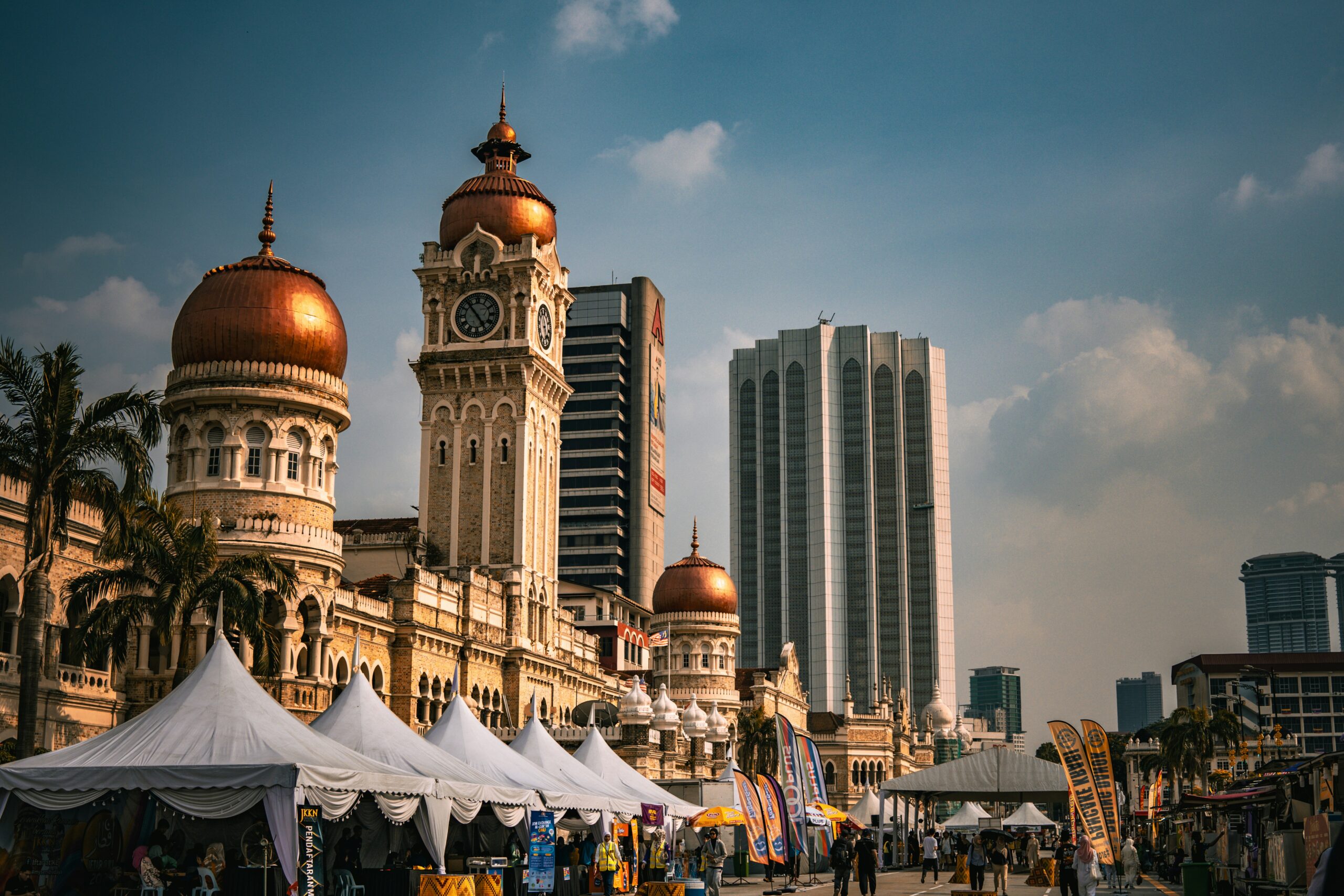
Merdeka Square is an important historical area in Kuala Lumpur.
The square is surrounded by colonial-era buildings and is a good place to see a different side of the city compared with the modern KLCC skyline.
The Sultan Abdul Samad Building is one of the most recognizable buildings in the area.
I recommend visiting this part of Kuala Lumpur on foot because several attractions are located relatively close together.
Central Market
Central Market is a good stop if you want souvenirs, traditional crafts, artwork and Malaysian cultural products.
It is more tourist-oriented than some of the city’s everyday markets, but it can still be useful if you want to buy gifts without spending too much time searching.
The surrounding area also has several interesting streets and small shops, so don’t rush away after visiting the market.
Chinatown and Petaling Street
Petaling Street is one of the liveliest areas in central Kuala Lumpur.
The streets are filled with food stalls, small shops, markets and restaurants. It’s a good place to walk around in the evening when the area becomes more active.
This is also a useful neighborhood for travelers who want to experience Kuala Lumpur beyond the polished shopping malls and skyscrapers.
Try some local food while you’re here, but compare prices before buying souvenirs or other items from market stalls.
Jalan Alor Food Street
If food is one of your main reasons for visiting Kuala Lumpur, put Jalan Alor on your itinerary.
The street becomes particularly lively in the evening, with restaurants and food stalls serving a wide range of Malaysian and Asian dishes.
It can be busy and touristy, but that is also part of the experience.
Rather than ordering a huge meal at one place, I prefer the idea of trying a few smaller dishes from different stalls. This lets you experience more of the local food scene.
Thean Hou Temple
Thean Hou Temple is another interesting place to visit if you want to see the cultural diversity of Kuala Lumpur.
The temple has colorful architecture and elevated views over parts of the city. It is especially attractive for photography.
Because it is outside the main cluster of attractions, you may want to combine it with another nearby stop rather than making a separate long journey.
Things to Do in Kuala Lumpur
Sightseeing is only part of the Kuala Lumpur experience. Leave some time in your schedule for activities that don’t feel like a checklist.
Try Malaysian Food
Don’t leave Kuala Lumpur without trying local food.
Some dishes worth looking for include nasi lemak, char kway teow, roti canai, satay, laksa and various rice and noodle dishes.
You don’t need to eat at expensive restaurants. Some of the best experiences can come from simple local restaurants and food courts.
If you’re unsure what to order, ask the staff what is popular or choose a dish that looks interesting.
Explore the City by Train
Kuala Lumpur’s rail system can be useful for travelers because driving through the city during busy periods can take longer than expected.
Using trains for major sightseeing areas can save both time and money.
For destinations that aren’t conveniently connected by rail, ride-hailing services can be a practical option.
Enjoy Kuala Lumpur’s Shopping Malls
Kuala Lumpur is excellent for shopping, especially if you want air conditioning during the hottest part of the day.
The city has large modern malls selling everything from international brands to electronics, clothing and local products.
Even if shopping isn’t your priority, malls can be useful places to eat, take a break and escape heavy rain.
See Kuala Lumpur at Night
Kuala Lumpur is worth exploring after dark.
The Petronas Twin Towers, KLCC area and city center take on a completely different atmosphere when the buildings and streets are illuminated.
You can also spend an evening around Jalan Alor or Chinatown for food and street life.
Where to Stay in Kuala Lumpur
Choosing the right area can make a noticeable difference to your trip.
Bukit Bintang
Bukit Bintang is one of the most convenient choices for first-time visitors.
There are plenty of hotels, restaurants, shopping malls and entertainment options nearby. It is also a good base if you want to experience the city at night.
You’ll find everything from budget accommodation to upscale hotels in this area.
KLCC
Staying around KLCC is a good option if you want to be close to the Petronas Twin Towers and modern Kuala Lumpur.
Hotels here can be more expensive, but the location is excellent.
Chinatown
Chinatown can be a better choice for travelers who want a more lively atmosphere and potentially lower accommodation prices.
It is also convenient for Central Market, Petaling Street and several historic areas.
KL Sentral
KL Sentral is particularly useful if transportation is your priority.
The area is a major transport hub, making it convenient for airport transfers and trips around Kuala Lumpur.
It may not have the same atmosphere as Bukit Bintang, but the practical location can save time.
How to Get Around Kuala Lumpur
Getting around Kuala Lumpur is generally straightforward.
The city’s trains are useful for many popular destinations, especially when traffic is heavy.
For shorter journeys or places that aren’t directly connected by rail, ride-hailing services can be convenient.
Walking is also possible in some central areas, particularly if you group nearby attractions together.
One important tip: don’t assume that two places that look close on a map will always be a quick walk. Kuala Lumpur’s heat, busy roads and large intersections can make walking less comfortable than expected.
For airport transfers, you can choose between rail services, buses, taxis and ride-hailing depending on your budget and arrival time.
How Much Does Kuala Lumpur Cost?
Kuala Lumpur can be affordable, but your daily spending depends heavily on your accommodation and lifestyle.
A budget traveler can keep costs relatively low by staying in hostels or simple hotels, eating at local restaurants and using public transportation.
A mid-range traveler might choose a comfortable hotel, eat at a mixture of local and international restaurants, use trains and ride-hailing services, and visit several paid attractions.
Luxury travelers have plenty of high-end hotels, restaurants and shopping options available.
Food is one area where you can save money without sacrificing the experience. Local dishes at casual restaurants and food courts can cost much less than meals at international restaurants.
I would also keep a little extra money in your daily budget for spontaneous expenses. You may find a food market, attraction or café that wasn’t in your original plan.
Best Time to Visit Kuala Lumpur
Kuala Lumpur has a tropical climate, so you should expect warm and humid weather throughout much of the year.
Rain can occur even when the day starts sunny. Heavy showers may arrive suddenly and then pass relatively quickly.
Because of this, I wouldn’t cancel a Kuala Lumpur trip simply because rain is in the forecast.
The best approach is to keep outdoor sightseeing flexible. Visit major outdoor attractions when the weather is comfortable and use museums, shopping malls, cafés and covered attractions when heavy rain arrives.
An umbrella or lightweight rain jacket can be very useful.
How Many Days Do You Need in Kuala Lumpur?
For a first visit, 3 days in Kuala Lumpur is a good starting point.
With three days, you can comfortably see the Petronas Twin Towers, KLCC, Batu Caves, Merdeka Square, Central Market, Chinatown and some of the city’s food areas.
If you have four or five days, you can slow down and explore neighborhoods beyond the main tourist attractions.
You could also use the extra time for a day trip or simply enjoy the city without constantly checking your itinerary.
If Kuala Lumpur is only one part of a larger Malaysia trip, two or three full days can be enough.
Practical Kuala Lumpur Travel Tips
Here are a few things I would keep in mind before visiting.
Carry some cash: Cards are widely accepted, but small restaurants and markets may still prefer cash.
Dress appropriately at religious sites: Some temples and religious attractions have clothing requirements. Carry something that can cover your shoulders or knees when necessary.
Start early: Outdoor attractions are generally more comfortable earlier in the day, especially during hot weather.
Don’t overpack your itinerary: Kuala Lumpur looks manageable on a map, but traffic can make journeys longer than expected.
Use public transport when practical: Trains can save both time and money during busy periods.
Keep valuables secure: As with any large city, take normal precautions in crowded markets and public transportation.
Drink plenty of water: The tropical heat and humidity can be tiring, especially if you’re walking between attractions.
Keep your plans flexible: Rain can change your schedule, so don’t put every outdoor attraction into one day.
Is Kuala Lumpur Worth Visiting?
Absolutely.
Kuala Lumpur may not have the beaches or dramatic natural scenery that Malaysia is famous for, but it offers something different.
It’s a city where modern skyscrapers stand close to historic buildings, where Malay, Chinese and Indian cultures influence everyday life, and where you can eat inexpensive local food before spending the evening looking at one of Southeast Asia’s most recognizable skylines.
For a first-time visitor to Malaysia, Kuala Lumpur is also an easy introduction to the country.
My advice is not to treat the city as a place where you simply visit a few famous landmarks and leave. Give yourself time to eat local food, walk through different neighborhoods and experience the city after dark.
Final Thoughts
Kuala Lumpur is a destination that rewards a little planning but doesn’t require a complicated itinerary.
For a first trip, I would stay somewhere central such as Bukit Bintang, KLCC, Chinatown or KL Sentral and organize your sightseeing by area. This saves time and gives you more opportunity to enjoy the city rather than sitting in traffic.
Visit the Petronas Twin Towers, explore Batu Caves, walk around Merdeka Square and Central Market, spend an evening around Chinatown or Jalan Alor, and most importantly, try plenty of Malaysian food.
If you’re planning a larger Malaysia trip, Kuala Lumpur is also an excellent starting point before continuing to destinations such as Penang, Langkawi, Melaka, Sabah or Sarawak.
With a sensible itinerary and a little flexibility for weather and traffic, Kuala Lumpur can be one of the easiest and most enjoyable places to begin exploring Malaysia.