Vietnam Travel Tips for First-Time Visitors is a complete guide for anyone planning their first trip to Vietnam.Whether you’re visiting Vietnam for its stunning landscapes, delicious street food, or rich culture, these practical travel tips will help you avoid common mistakes, save money, and make the most of your first visit.
However, if you are planning your first trip to Vietnam, knowing a few important things in advance can make your journey much easier. Where should you stay? How can you travel between cities? What food should you try? How should you handle money? These may seem like small questions, but they can make a big difference during your trip.
In this guide, I will share 15 practical Vietnam travel tips that I think every first-time visitor should know.
1. Make a Travel Plan Before You Go
Vietnam is a large country, so trying to see everything in a few days is not a good idea.
Before your trip, decide which cities and places you really want to visit. Hanoi, Ha Long Bay, Da Nang, Hoi An, and Ho Chi Minh City are some popular choices, but there are many other places worth exploring.
The best itinerary depends on how many days you have. If you only have one week, it is better to focus on a few places instead of spending most of your time traveling between cities.
A simple plan will help you save both time and money.
2. Choose the Right Time to Visit
Vietnam does not have exactly the same weather everywhere. Different parts of the country can have different weather conditions at the same time.
For this reason, you should check the weather for the specific regions you plan to visit.
If your trip includes beaches, mountains, outdoor activities, or boat tours, weather can be especially important. Rain can sometimes affect outdoor plans, so checking the forecast before booking activities is a good idea.
There is no single perfect month for every part of Vietnam. The best time depends on where you are going and what you want to do.
3. Do Not Bring Too Much Luggage
One of my simple Vietnam travel tips is to avoid carrying too much luggage.
You will probably move from one city to another during your trip. Having a large suitcase can make transportation more difficult, especially when you are using local transportation.
Pack comfortable clothes, basic toiletries, chargers, a power bank, important documents, and any necessary personal items.
You can always buy some basic things in Vietnam if you forget something.
Traveling with lighter luggage can make your trip much more comfortable.
4. Try Vietnamese Food
Vietnamese food is one of the biggest attractions of the country.
If you visit Vietnam, you should try some local dishes instead of eating only familiar international food.
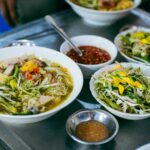
Pho is probably one of the most famous Vietnamese dishes. You can also try Banh Mi, Bun Cha, fresh spring rolls, and different types of Vietnamese coffee.
Every region may have its own food specialties, so do not be afraid to try something new.
If you have a sensitive stomach, however, it is better to start slowly rather than trying too many new foods on your first day.
5. Be Ready for Vietnamese Street Food
Vietnam has a strong street food culture, and exploring local food stalls can be a fun part of the trip.
You may find small restaurants and food stalls on busy streets. Some places may look very simple, but the food can still be delicious.
When choosing street food, use common sense. Look for places that appear clean and busy with local customers. Freshly prepared food is generally a better choice.
You do not need to avoid street food completely. Just choose your food carefully and pay attention to hygiene.
6. Learn About Vietnamese Currency
The local currency of Vietnam is the Vietnamese Dong, usually written as VND.
The numbers on Vietnamese prices can look surprisingly large if you are seeing the currency for the first time. That is why it is a good idea to understand the approximate exchange rate before your trip.
Always check the price carefully before buying something, especially in busy tourist areas.
It can also be helpful to use a currency conversion app on your phone so you can quickly understand how much something costs in your own currency.
7. Carry Both Cash and Cards
Do not depend completely on your credit or debit card when traveling around Vietnam.
Cards and digital payments may be available in many hotels, restaurants, and modern businesses. However, smaller shops, local markets, street food stalls, and some local services may still require cash.
It is therefore useful to carry some Vietnamese Dong with you.
At the same time, avoid carrying all your money in one place. Keep your cash and important cards safely organized so that you can reduce the risk of losing everything at once.
8. Plan Your Internet Connection
Having internet access while traveling can make your trip much easier.
You may need internet for Google Maps, translation apps, ride-booking services, hotel information, online tickets, and communication with family or friends.
Before leaving for Vietnam, think about whether you want to use an international roaming plan, local SIM, or eSIM.
Having internet from the beginning of your trip can be especially useful if you are arriving at an airport and need directions to your hotel.
9. Use Maps and Translation Apps
Language can sometimes be a challenge when visiting another country for the first time.
You should not assume that everyone will speak English. In tourist areas, you may find many people who can communicate in English, but this may not always be the case.
A translation app can be very useful when ordering food, asking for directions, or communicating with local people.
Google Maps can also help you find hotels, restaurants, tourist attractions, shops, and transportation options.
Before your trip, download the apps you think you will need and make sure you know how to use them.
10. Understand Transportation Before Traveling
Vietnam offers several transportation options, and the best choice depends on your destination, budget, and available time.
Inside cities, you may use taxis, ride-hailing services, buses, or other local transportation.
When traveling between cities, you can consider flights, trains, and buses depending on the route.
Sometimes the cheapest option is not necessarily the best option. A longer bus journey may save money but take many more hours.
Think about the balance between price, travel time, comfort, and convenience before choosing your transportation.
11. Be Careful When Crossing Busy Roads
Traffic can be one of the first things that surprises first-time visitors to Vietnam.
Busy cities can have many motorcycles, cars, and other vehicles on the roads. If you are not used to this type of traffic, crossing a busy road may feel confusing at first.
Take your time and pay attention to the traffic around you. Do not suddenly run into the road.
In busy areas, observe how local pedestrians cross the street and follow safe practices.
Being patient and alert is much better than rushing.
12. Choose Your Hotel Location Carefully
When booking a hotel, do not look only at the cheapest price.
Location is also very important.
A hotel that is slightly more expensive but close to restaurants, attractions, and transportation may actually save you money and time.
Before booking, check the hotel’s location on a map. Look at nearby restaurants, shops, public transportation, and the distance from the places you want to visit.
Reading recent guest reviews can also help you understand what the area is really like.
13. Be Careful About Tourist Traps
Popular tourist destinations sometimes attract people who try to charge visitors more than expected.
This does not mean you should be afraid of everything. Just use common sense.
Before using a service, ask about the price. If you are taking transportation or booking an activity, make sure you understand the total cost before agreeing.
When something seems unusually expensive, compare the price with a few other options.
A little research can help you avoid unnecessary expenses.
14. Respect Vietnamese Culture
Vietnam has a rich history and culture, and respecting local customs is an important part of responsible travel.
When visiting temples, historical sites, or religious places, pay attention to local rules.
Dress appropriately when required, avoid disturbing other visitors, and ask before taking photographs of people when necessary.
Remember that you are visiting another country to experience its culture and lifestyle. Showing respect to local people can make your travel experience more positive.
15. Do Not Try to See Everything in One Day
One of the most important travel tips I can give is to avoid making your itinerary too busy.
Trying to visit eight or ten places in one day may look good on paper, but it can quickly become exhausting.
Instead, give yourself enough time to enjoy each place.
Sit down at a local café, try some food, walk around the streets, take photos, and simply enjoy the atmosphere.
Sometimes the best travel memories come from the moments that were not included in the original itinerary.
A Few Extra Tips for First-Time Visitors
Before traveling to Vietnam, make sure your passport, visa or entry requirements, hotel details, travel insurance if needed, and other important documents are properly organized.
It is also a good idea to keep digital copies of important documents in a secure place.
Do not keep all your money, cards, and documents together. Having backup copies and alternative payment options can be helpful if something gets lost.
You should also keep emergency contact information available on your phone.
Most importantly, do not feel pressured to make your trip perfect. Things may not always go exactly according to your plan, and that is normal when traveling.
A delayed bus, unexpected rain, or a restaurant that does not meet your expectations does not have to ruin your entire trip.
Stay flexible and enjoy the experience.
Final Thoughts
Vietnam can be an exciting destination for first-time travelers. From delicious Vietnamese food and beautiful landscapes to historic cities and unique local culture, there is a lot to discover.
However, a little preparation can make the experience much easier.
Plan your route according to your available time, check the weather, choose your accommodation carefully, understand local transportation, carry both cash and cards, and keep your important documents safe.
At the same time, do not make your schedule so busy that you cannot enjoy the journey.
Try local food, explore the streets, talk to local people when possible, and take time to appreciate the culture.
You do not need a perfect travel plan to have a great Vietnam trip. You simply need some preparation, a reasonable budget, and an open mind.
If this is your first time visiting Vietnam, these simple tips can help you feel more confident and prepared before your journey begins.